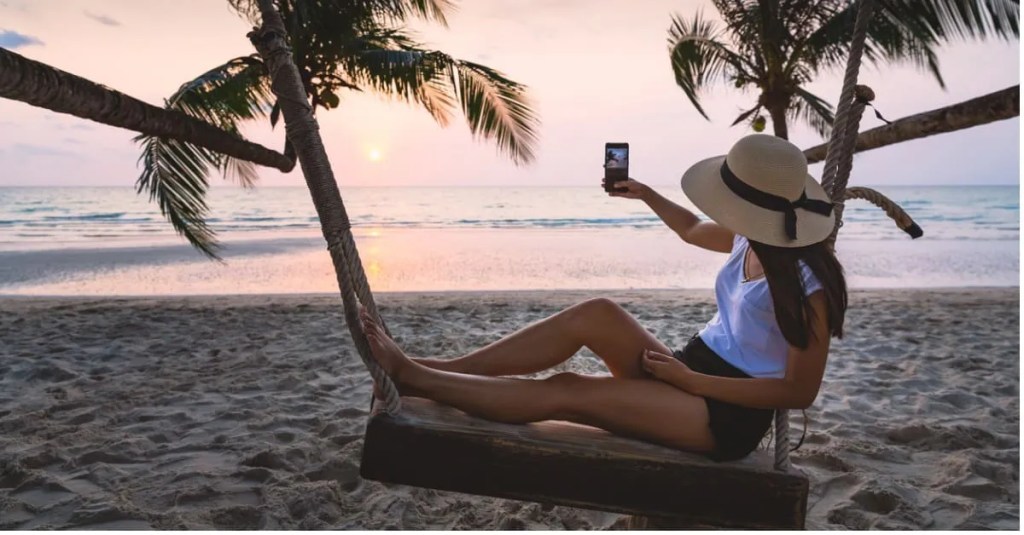
Well, how did your last Meta ad campaign post work out? Any idea who it reached? Did it bring you any bookingsduring the off-season, while no festival or trade fair is in sight? Do you want to reach audiences outside of your usual target, like families? You may then want to consider booking travel influencers as paid media.
Influencer Marketing: A Creative Alternative to Traditional Paid Social
Among the different types of paid social media (sponsored posts, paid ads) that increase brand awareness, travel influencer partnerships may be a creative way for hoteliers to build visibility and increase bookings.
The Fast Track to “Know, Like, and Trust”
First off, travel influencers are a great way to fast-track what marketers call the “Know, Like, and Trust” process. Because viewers are already “bought into” the influencer, they will more easily form an emotional connection and trustyour brand—an essential trigger in the buying process. It’s also a great way to increase your brand’s “social proof,” the psychological phenomenon where people are more likely to buy the same products as those they trust. This makes your hotel brand the focal point of the travel experience, not just a checkbox in the planning process.
Reaching the Next Generation of Travelers
Furthermore, travel influencers are an effective way to reach younger audiences. Do you remember when travelers had to consult reference travel guides like Lonely Planet or Le Routard (for the French) to find hotel recommendations? Travel influencers—bloggers, Instagrammers—now fulfill a similar role as sources of inspiration for younger generations. They have become a go-to for travel ideas: in the U.S., about 85% of adults checked influencer recommendations for travel inspiration (Statista 2021).
Creativity Meets Authenticity
Finally, travel influencers are creative powerhouses. They have a knack for producing engaging content and showcasing destinations in compelling ways. Some influencer content is highly polished, featuring stunning visuals of beach resorts or vibrant lifestyle hotels. Others opt for more fun, relatable, or unscripted content (have you heard of lofi content?—low fidelity, intentionally raw content). The variety among hotel influencers allows hotel brands to tailor the tone of their communication and choose creators who truly align with their brand voice. Some big brands have already embraced this: Moxy partnered with YouTuber Taryn Southern (Instagram) to conduct out-of-the-box interviews in replicas of Moxy hotel rooms.
How to Choose the Right Travel Influencer
The size of your brand, the objective of your campaign, the platform presence of the influencer, and the audience you want to reach are all factors to consider when choosing a travel influencer. Large brands tend to collaborate with “macro influencers” who have very large audiences (over 1 million followers), while smaller brands can work with macro (100K–1M) or micro influencers (10K–100K), who often have very engaged communities.
Niche Influencers for Targeted Campaigns
Since some influencers operate in niche segments, they can be ideal for targeted outreach. Want to attract couples in the shoulder season? Partnering with aspirational duos like @saltinourhair could be a good fit. Looking to break the image of your destination as purely business-oriented? Family-focused influencers like @travelbabbo can help. Even luxury brands are expanding their reach—for example, St. Regis Hotels & Resorts collaborated with ‘mommy influencer’ Naomi Davis (Instagram) to appeal to families.
 The Hotel Watch
Leave a comment